
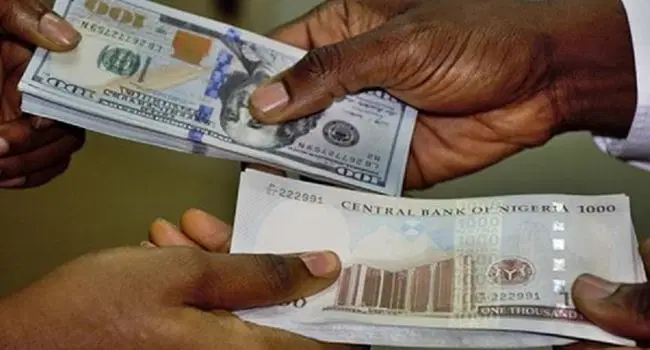
The naira began trading today with a quiet confidence that has been missing for months. After the sharp swings that defined much of late 2025, today’s dollar–naira exchange rate tells a calmer story — one of balance, patience, and cautious optimism.
Across both official and informal markets, movements have been narrow. Nothing dramatic. No sudden shocks. Just a currency trying to find its footing again.
A Market Catching Its Breath
At the official Nigerian Foreign Exchange Market (NFEM), the naira opened around ₦1,424 to the US dollar. Through the early hours, it moved only slightly, touching the mid-₦1,425 range at its highest and dipping just below ₦1,423 at its lowest.
This may not sound remarkable at first, but for those who follow Nigeria’s currency closely, stability itself has become news. The current levels are closely aligned with last week’s closing rate, suggesting that traders and institutions are largely on the same page for now.
From experience, periods like this often reflect a market that is waiting — waiting for fresh signals on dollar supply, inflation data, or policy direction. It is not excitement that defines today’s trading, but restraint.
What’s Happening on the Street?
In the parallel market, the picture is familiar but slightly improved. Cash dollars are changing hands roughly between ₦1,450 and ₦1,465, depending on location and volume. The gap between official and street rates still exists, but it has stopped widening.
Bureau De Change operators in cities like Lagos and Abuja describe demand as “moderate.” Compared to the rush seen toward the end of last year, activity has cooled. That said, travel plans and school fee payments are still quietly supporting demand for dollars, especially in cash form.
Why This Stability Matters
Exchange rate stability, even at high levels, gives businesses something priceless: predictability. Importers can plan better. Small traders can price goods with less fear of sudden losses. Families sending children abroad for school can budget with fewer surprises.
This steadiness is also tied to recent liquidity management by the Central Bank and cautious participation by investors. When supply and demand stop fighting each other, markets naturally calm down.
What People Usually Want to Know
Many Nigerians are asking one simple question: Is the naira recovering or just resting?
The honest answer is that it appears to be resting.
Related Post:Pound to Naira Black Market Exchange Rate Today, 2nd January 2026.
Today’s rates suggest consolidation rather than a strong rebound. For a meaningful recovery, the market will need consistent dollar inflows, stable oil prices, and controlled inflation at home. Without those, stability can fade as quickly as it appears.
An Expert Lens on the Outlook
From a policy perspective, the coming weeks will be critical. Foreign reserves, oil export earnings, and confidence in monetary signals will shape what happens next. If dollar supply remains steady and speculation stays low, the naira could hold this range longer than many expect.
However, the market remains sensitive. Any shock — global or local — can still tilt the balance.
One Practical Takeaway
If you are planning a dollar-dependent expense, this period of relative calm may be a good time to plan carefully rather than rush. Stability offers room for thoughtful decisions, even if it does not yet promise cheaper dollars.
For now, the naira is not surging — but it is no longer stumbling either. And in today’s economic climate, that alone is meaningful news.
Stay Connected with AllMediaplus.com Enjoyed this post? Join our community to receive timely updates, trusted guides, and important news. Join our WhatsApp Group:
https://chat.whatsapp.com/LYOF1rlyCODF2CJsRwxqHc
Follow our WhatsApp Channel:
https://whatsapp.com/channel/0029Vb74OUm9Gv7VtNOVFW21
Like our Facebook Page:
https://facebook.com/allmedia24news
